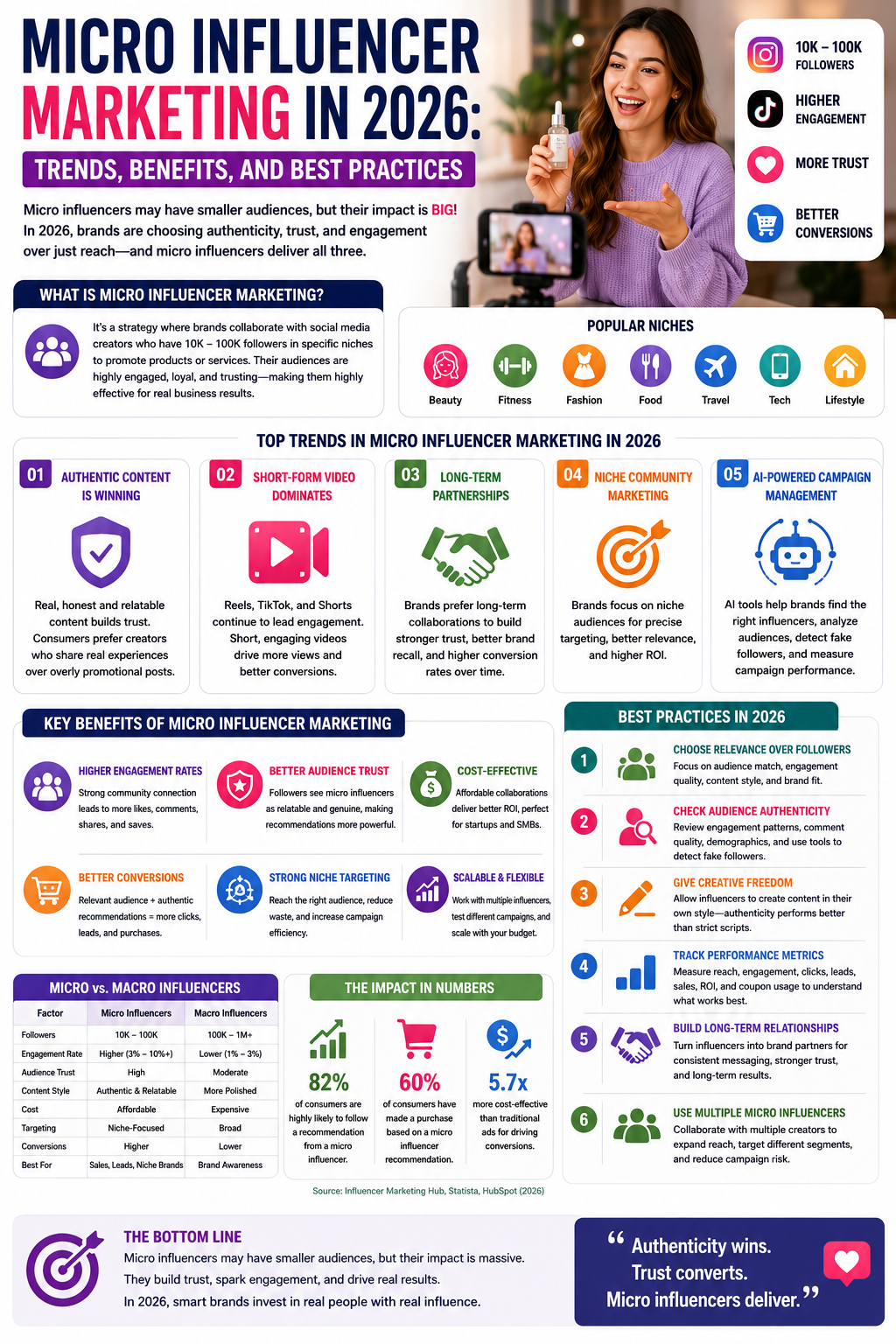
As digital marketing continues to evolve in 2026, brands are focusing more on authentic engagement rather than just massive reach. This shift has made micro influencer marketing one of the most effective strategies for businesses of all sizes.
Micro influencers—typically creators with 10,000 to 100,000 followers—offer a powerful mix of trust, niche targeting, affordability, and stronger audience engagement. In a world where consumers value authenticity over polished ads, micro influencers are helping brands achieve better marketing results.
Let’s explore the latest trends, benefits, and best practices of micro influencer marketing in 2026.
What Is Micro Influencer Marketing?
Micro influencer marketing is a strategy where brands collaborate with smaller social media creators to promote products or services.
Unlike celebrity influencers, micro influencers focus on specific communities such as:
- Beauty
- Fitness
- Fashion
- Food
- Travel
- Technology
- Lifestyle
- Local business niches
Their audience tends to be more engaged, loyal, and trusting—making them highly effective for conversions.
Trends in Micro Influencer Marketing in 2026
1. Authentic Content Is Winning
Consumers in 2026 are smarter than ever. They can quickly spot overly promotional or fake content.
Brands are moving toward creators who share:
- Honest reviews
- Daily-life product use
- Natural recommendations
- Real storytelling
- Behind-the-scenes experiences
Authenticity now drives trust—and trust drives sales.
2. Short-Form Video Dominates
Platforms like:
- Instagram Reels
- TikTok
- YouTube Shorts
continue to dominate social media engagement.
Micro influencers are highly effective in creating short, engaging videos that feel natural and relatable.
Popular content formats:
- Product demos
- Unboxing videos
- Tutorials
- Before-and-after results
- Quick testimonials
3. Long-Term Partnerships Over One-Time Promotions
Brands are moving away from one-time influencer posts.
Instead, they prefer long-term collaborations that build stronger audience trust.
Why?
Repeated exposure creates:
- Better brand recall
- More credibility
- Higher conversion rates
- Consistent campaign performance
Relationship-based influencer marketing is growing fast.
4. Niche Community Marketing
Broad targeting is becoming less effective.
Brands now focus on micro influencers with niche-specific communities.
Examples:
- Skincare → Beauty creators
- Gym products → Fitness influencers
- Travel packages → Travel creators
- Local cafes → City-based influencers
Precision targeting improves ROI significantly.
5. AI-Assisted Influencer Campaign Management
In 2026, brands are using AI tools for:
- Influencer discovery
- Audience analysis
- Fake follower detection
- Performance tracking
- ROI measurement
This helps businesses choose better creators and reduce wasted spending.
Benefits of Micro Influencer Marketing
1. Higher Engagement Rates
Micro influencers often outperform larger creators in engagement because of stronger audience relationships.
Followers actively:
- Like
- Comment
- Share
- Save posts
- Ask product questions
This boosts visibility and interaction.
2. Better Audience Trust
Micro influencers feel relatable and genuine.
Their recommendations are seen as personal advice rather than paid advertising.
This trust leads to:
- More clicks
- Better inquiries
- Higher purchases
- Improved lead generation
3. Cost-Effective Marketing
For startups and small businesses, budget matters.
Micro influencers offer:
- Affordable collaborations
- Better ROI
- Flexible partnerships
- Multi-influencer campaign options
You can often work with several micro influencers for the cost of one macro influencer.
4. Better Conversions
Smaller audience doesn’t mean smaller results.
Because micro influencers target relevant audiences with authentic messaging, they often drive stronger conversions than bigger influencers.
Perfect for:
- Product sales
- Lead generation
- Website traffic
- App downloads
5. Strong Niche Targeting
Instead of marketing to random audiences, businesses reach ideal customers.
This means:
Less wasted budget + better campaign efficiency.
Best Practices for Micro Influencer Marketing in 2026
1. Choose Relevance Over Follower Count
Don’t select creators just because they have more followers.
Focus on:
✔ Audience match
✔ Engagement quality
✔ Content style
✔ Brand fit
2. Check Audience Authenticity
Fake followers still exist.
Review:
- Engagement consistency
- Comment quality
- Audience demographics
- Suspicious follower growth
Use influencer analytics tools when possible.
3. Give Creative Freedom
Micro influencers understand their audience better than brands do.
Avoid overly scripted campaigns.
Better approach:
Share campaign goals but allow authentic content creation.
This improves trust and performance.
4. Track Performance Metrics
Measure campaign success using:
- Reach
- Engagement
- Click-through rate
- Leads
- Sales
- ROI
- Coupon code usage
Data helps optimize future campaigns.
5. Build Long-Term Relationships
One post may create awareness.
Long-term collaborations create conversions and loyalty.
Think partnership—not transaction.
6. Use Multiple Micro Influencers
Instead of depending on one creator, collaborate with multiple niche influencers.
Benefits:
- Wider reach
- Better targeting
- Reduced campaign risk
- More content variety
Final Thoughts
In 2026, micro influencer marketing is no longer just a trend—it’s a core digital marketing strategy.
With stronger trust, better engagement, authentic storytelling, and cost-effective conversions, micro influencers offer incredible value for brands.
Whether you’re a startup, local business, or growing e-commerce brand, micro influencer marketing can help you connect with the right audience more effectively.
Authenticity wins. Trust converts. Micro influencers deliver.
No responses yet